
1.5°C Pathway Emissions

Carbonwise - 1.5C- PATHWAY-EMISSIONS

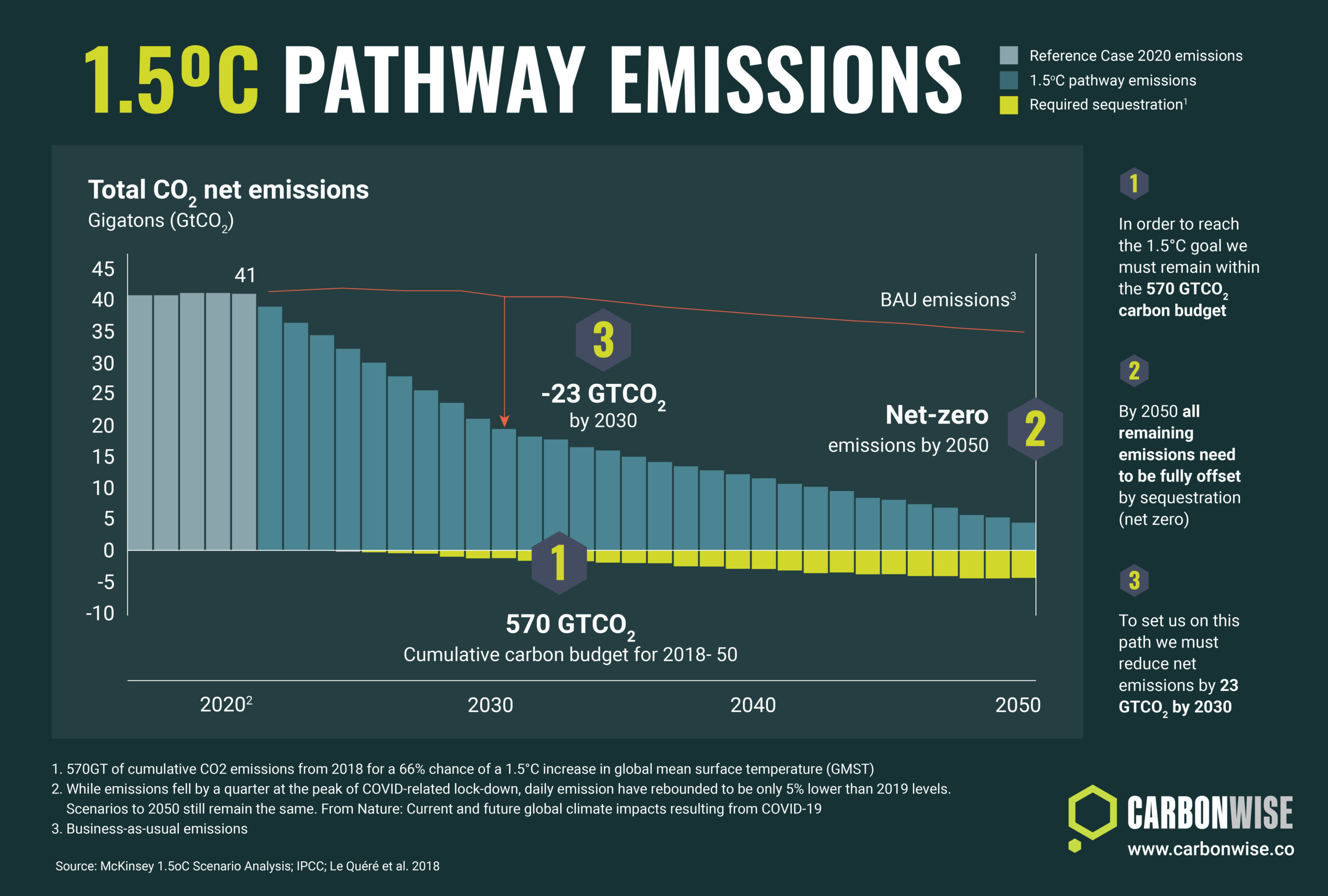
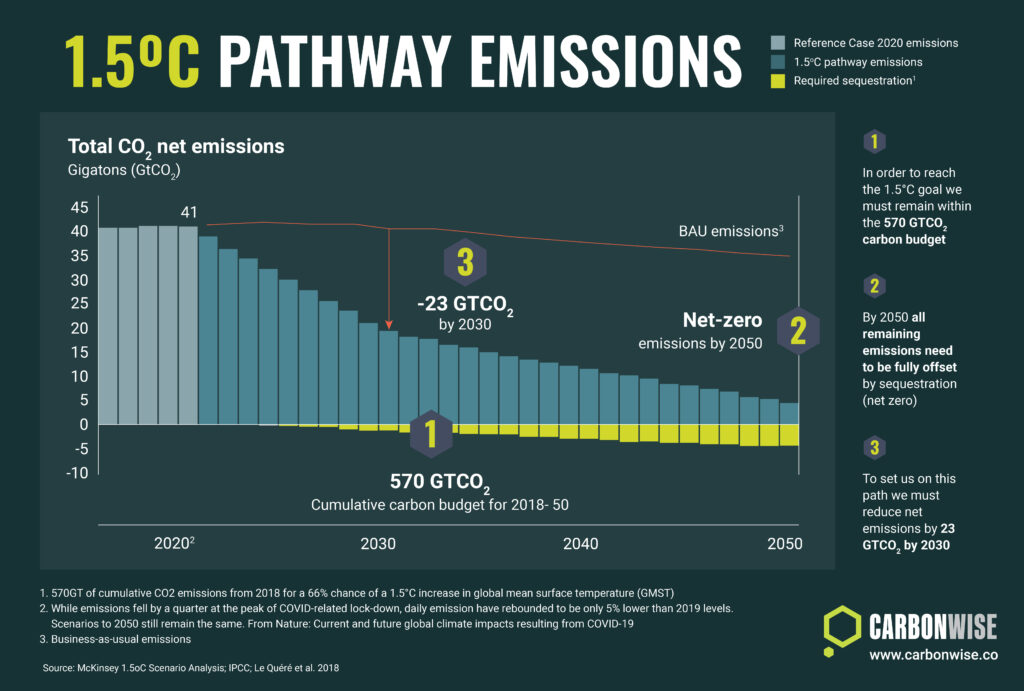
Limiting the rise of the average global temperature to less than 1.5 Degrees Celsius is vital but the question is how do we achieve this? In short, we must keep total global emissions between 2018 and 2050 below 570 gigatonnes of CO2 equivalent with two important stage posts en route. First, by 2030, we need to cut emissions by 23 GT and then, ultimately, every tonne of carbon emitted needs to have an equivalent tonne of carbon removed from the atmosphere, in other words, achieving net zero, by 2050.

Content up-to-date at time of publication

Climate Politics

DATA COMPILED BY

The Carbonwise editorial team is formed of seasoned established industry writers and specialist journalists.

LATEST VISUAL LEARNING

This chart shows the total amount of man-made emissions created by the world's biggest polluters.
The amount of atmospheric CO2 has charted a steady climb higher. The Mauna Loa Observatory on the north flank of volcano of the same name
Refers to sectors in which greenhouse gas emissions are difficult to reduce. Includes industries such as iron and steel, cement, refining, chemicals, shipping, aviation and
A set of 10 principles put forward by the Integrity Council for the Voluntary Carbon Market (ICVCM) which define high-quality carbon credits, focused on aspects
Airbnb’s direct greenhouse gas (GHG) emissions come from its own offices, while indirect emissions come from the energy it consumes, and from upstream and downstream

19 May 2026

GLOSSARY
Hard-to-abate

Refers to sectors in which greenhouse gas emissions are difficult to reduce. Includes industries such as iron and steel, cement, refining, chemicals, shipping, aviation and heavy duty trucks.

12 May 2026

GLOSSARY
Core Carbon Principles

A set of 10 principles put forward by the Integrity Council for the Voluntary Carbon Market (ICVCM) which define high-quality carbon credits, focused on aspects such as governance, tracking, verifiability and additionality.

29 April 2025

ARTICLE
Case Study: Airbnb targets net zero by 2030 with clean energy, carbon credits

Airbnb’s direct greenhouse gas (GHG) emissions come from its own offices, while indirect emissions come from the energy it consumes, and from upstream and downstream activities associated with its business...

Work with us

Partner with the Carbonwise team to produce innovative educational content on Carbon Markets

Work with us

Partner with the Carbonwise team to produce innovative educational content on Carbon Markets.

Sign up to our monthly newsletter for the latest content releases, events, training offers & more!​

Join the Carbonwise community