The iron and steel industry faces a significant challenge: how to continue producing the steel needed for infrastructure and economic growth while cutting carbon emissions.
Much work has already gone into the question, and lower-carbon technologies are available. But full decarbonisation of iron and steelmaking remains a long way off.
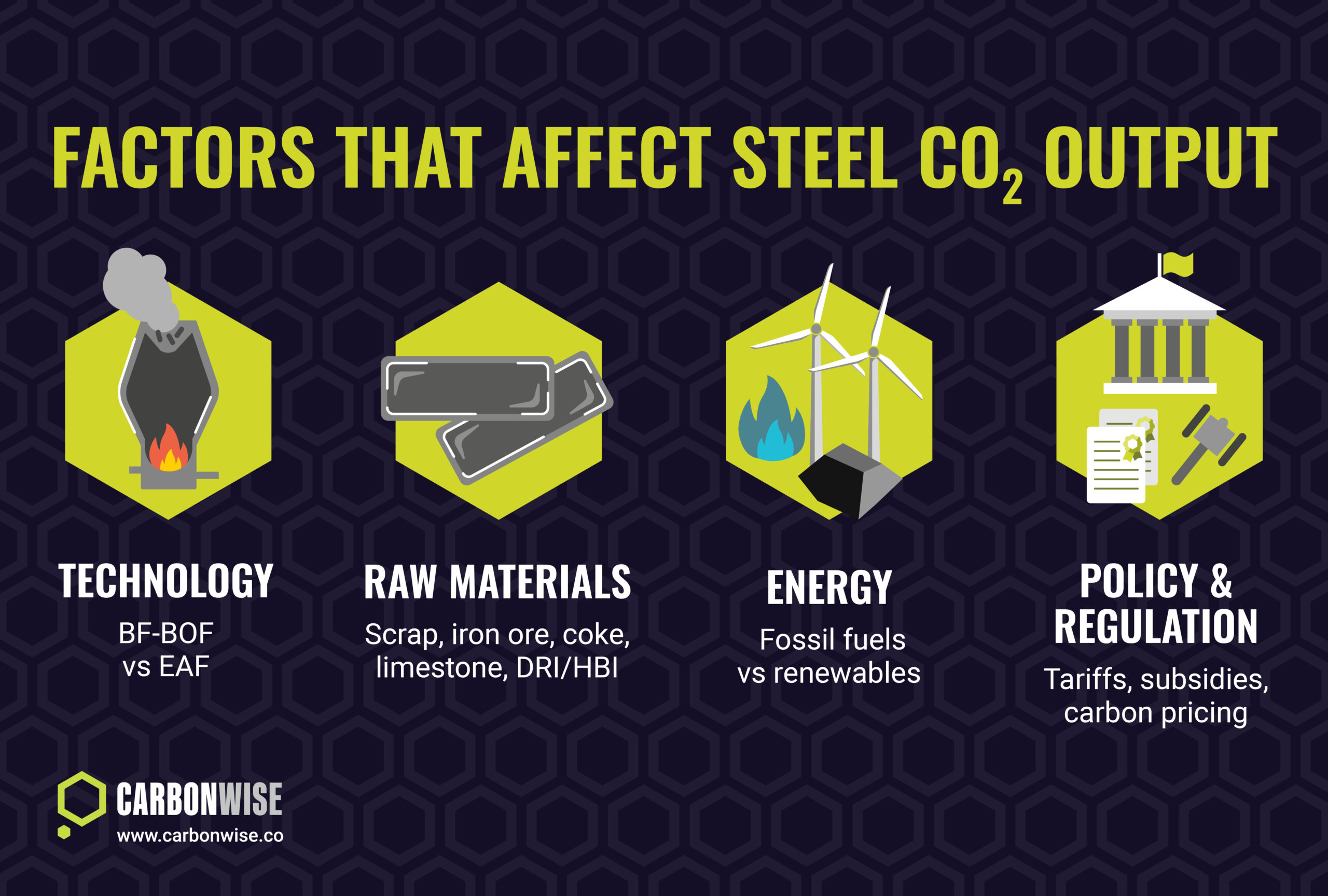
The economics also vary widely from one producer and region to another. Steel demand, raw materials, energy costs, technology, finance and environmental policy all play a part.
In previous articles, we have looked at how the EU Emissions Trading System (EU ETS) is affecting heavy industry and other so-called ‘hard-to-abate’ sectors in Europe.
Here, we turn to California, which operates its own statewide carbon market, the Cap-and-Invest Program, and ask what its evolution could mean for the steel sector.
California is an unusual steel market.
The state has significant re-rolling, finishing and fabrication activity, but no operating crude-steel mill. California Steel Industries (CSI), for example, is effectively a re-roller: it buys steel slab from US and overseas suppliers and rolls it into finished flat-rolled products rather than making crude steel itself.
New steelmaking capacity is, however, on the way.
Pacific Steel Group (PSG) is building its Mojave Micro Mill, a scrap-based rebar plant that the company says will become California’s only operating steel mill when it comes onstream. PSG describes it as the first new steel mill built in the state for more than 50 years.
That distinction matters for carbon policy. California is not trying to decarbonise an established fleet of blast furnaces. Its carbon regime currently affects steel processors and other industrial facilities, while also helping to shape the economics of bringing new, lower-carbon steelmaking capacity into the state.
Why the EAF route matters
Electric arc furnaces (EAFs) already account for a large share of US steelmaking.
Unlike the conventional blast furnace-basic oxygen furnace (BF-BOF) route, which typically uses coal and coke to reduce iron ore, EAFs mainly use electricity to melt scrap steel and other iron-bearing materials.
The EAF route can therefore have a substantially lower carbon intensity than BF-BOF steelmaking, particularly when a mill uses a high proportion of recycled scrap and has access to low-carbon electricity.
That is directly relevant to Mojave.
PSG says the new mill is being designed around scrap-based EAF steelmaking, renewable generation and energy storage, with no on-site fossil-fuel combustion in the steelmaking process.
California’s electricity mix also gives an EAF mill a relatively favourable starting point. In 2024, 45.2% of the state’s retail electricity sales came from Renewable Portfolio Standard-certified renewables. Including large hydro and nuclear, the combined figure was 67%.
For a scrap-based EAF mill, cleaner electricity can translate directly into a lower carbon intensity per tonne of steel.
Free allocation and carbon leakage
California also highlights one of the longstanding problems with carbon pricing: how to make domestic industry pay for emissions without simply shifting production – and the emissions – somewhere else.
The California Air Resources Board (CARB) provides free allowances to eligible industrial facilities partly to reduce this risk of carbon leakage.
Industrial allocation depends on factors including production, emissions benchmarks and the level of assistance given to sectors judged to be exposed to trade.
Free allocation does not mean that industry is insulated indefinitely from carbon costs. Assistance can change as the overall emissions cap falls, while the position of an individual facility also depends on its output, verified emissions and ability to reduce them.
That is particularly relevant to steel. California re-rollers, fabricators and, eventually, its new EAF mill compete with steel and steel products made elsewhere in the US and overseas, where producers may face very different energy costs and carbon constraints.
Tighter allowance supply – with industry support
In May 2026, CARB adopted significant changes to the Cap-and-Invest Program as California extended the scheme through to 2045.
Among the changes is the removal of around 118 million allowances from the 2027–30 annual allowance budgets. In simple terms, that tightens the general supply of allowances under the program and strengthens the long-term incentive to cut emissions.
But that is only part of the picture.
CARB is also creating a separate reserve of roughly 118 million allowances for its Manufacturing Decarbonization Incentive (MDI).
Those allowances are not automatically released back into the market. They can be allocated to qualifying industrial projects that cut greenhouse gas emissions.
The amendments therefore combine a tighter general carbon constraint with a separate pool of allowances intended to help industry invest in decarbonisation.
CARB values the MDI at around $4 billion. It is not, however, simply a $4 billion cash fund. The mechanism is backed by the dedicated allowance reserve, with the first applications expected in 2027 and the first incentive allowances due to become available from 2028.
For steel and other trade-exposed industries, this creates a more complicated policy picture than simply ‘higher carbon prices’.
The cap is tightening, but CARB is simultaneously retaining free allocation and providing additional support for industrial businesses prepared to invest in emissions reductions.
The amended Cap-and-Invest regulations took effect on September 1, 2026, following approval by California’s Office of Administrative Law.
The competitiveness question
Carbon pricing is only one factor in a steel investment decision.
Raw material and energy costs, product mix, freight, technology, import competition and demand all affect whether a mill can operate profitably.
Steel assets also have long lives. A producer investing in a new mill today needs to know that it can remain commercially viable for decades.
California steel processors and, eventually, its new EAF producer have the added complication of competing against steel made in jurisdictions where producers do not necessarily face the same carbon costs.
California accounts for emissions associated with electricity imported into the state, but it does not currently have a general carbon border charge on imported steel comparable with the EU’s Carbon Border Adjustment Mechanism (CBAM).
Mojave therefore provides an interesting test case.
Rather than taking an existing high-emissions steelworks and retrofitting a lower-carbon production route, PSG is building a new scrap-based EAF mill from the outset.
The commercial question is whether the combination of scrap, electrification, relatively low-carbon power and state policy can compete with steel shipped in from elsewhere.
That question goes to the heart of carbon leakage: carbon pricing can encourage lower emissions at home, but its environmental impact is weakened if production simply shifts to jurisdictions with less stringent climate policies.
Different steelmaking routes, different solutions
California’s emerging scrap-based EAF production represents one route to lower-carbon steel. It is not a solution that can simply be replicated at every steel plant.
Integrated BF-BOF producers face a different challenge because a large share of their emissions comes from reducing iron ore using coal and coke.
One alternative is direct reduced iron (DRI), which produces metallic iron without using a conventional blast furnace. DRI can then be used alongside scrap in an EAF.
Some direct-reduction technologies can initially operate on natural gas while allowing greater use of low-emissions hydrogen as it becomes commercially available. When hydrogen replaces carbon as the reducing agent, water rather than CO2 is the principal reaction product from the reduction process.
That is not necessarily the route California’s new scrap-based mill needs to take.
It does, however, show why there is no single technological answer to steel decarbonisation. The right approach depends on a producer’s existing plant, raw materials, energy supply, product mix and local economics.
What does Cap-and-Invest mean for California steel?
For California’s steel sector, the latest changes have three main consequences:
- A tighter long-term carbon constraint
- Continued free allocation for eligible trade-exposed industry
- Dedicated support for industrial decarbonisation investment
But California also raises a wider question for carbon markets.
The state combines significant steel consumption, re-rolling and fabrication with almost no current crude steelmaking – while a new scrap-based EAF mill is being built within its carbon-pricing regime.
This makes California an interesting test of whether carbon policy can do more than require existing industry to cut emissions.
Can carbon pricing, protection against carbon leakage and support for decarbonisation investment also create conditions in which new, lower-carbon industrial capacity can compete?
The answer will matter beyond California and beyond steel.
Hard-to-abate industries around the world face the same underlying tension: carbon prices need to be strong enough to change investment and operating decisions without simply pushing industrial production – and emissions – elsewhere.
For steelmakers, the technological answer will differ from plant to plant. An integrated producer, an established EAF mill and a re-roller all start from different positions.
Ultimately, however, lower-carbon technologies have to work on two measures: tonnes of CO2 avoided and the cost of producing a tonne of steel.
To find out more about how new technology can help decarbonise the emissions-intensive industries, check out our article here: Can Low Carbon Technologies Clean Up the Heavy Industries? – Carbonwise
To see how green hydrogen can reduce CO2 emissions, see our Visual Learning asset: